


Dear readers,
When managers at one of Air Canada’s hubs want to track a piece of ground equipment, they place a magnet on a whiteboard with its approximate location. That works well enough… until it doesn’t. “Some of those magnets fall off the whiteboard,” Air Canada’s newish COO Mark Nasr told me recently.
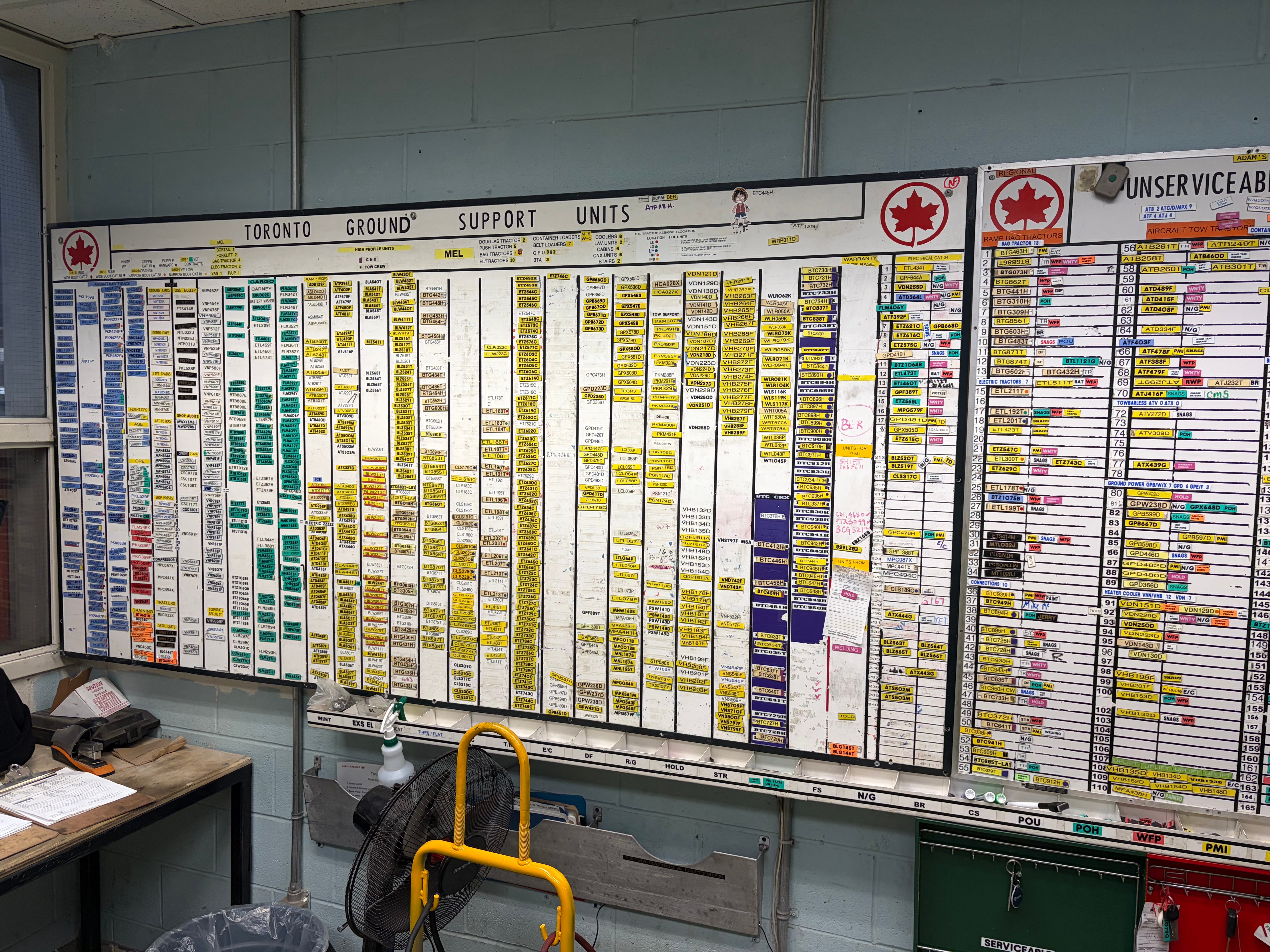
Nasr has been on a mission to bring this system into the 21st century for some time — first as the airline’s executive vice president in charge of digital, technology, marketing, and loyalty, when he designed the airline’s new ground equipment tracking program; and since his April promotion to COO, as the executive implementing it.
At first glance, this modern version of the whiteboard is basic stuff. Managers soon will track the precise location of each vehicle, as well as its status, including whether it’s fully charged or filled with gas, and when it needs maintenance. They also will know who is driving it, ensuring that employees have “the right level of familiarity and recency with the equipment,” Nasr said. And they’ll be able to ensure the right equipment is that the right gate, “helping to ensure we can resource arrivals and departures without delays,” he added.1
But it’s about more than that, because once an airline improves its technology, it can tie what it learns from its equipment (and the cameras on them) to its terminal management system, and voilà, it’ll have much more data to determine the health of the operation. Nasr, who was more excited about ground service equipment than any executive I have ever interviewed, explained how this technology could improve on-time performance.